Data formats may sound like a technical topic, but you interact with them every day. Every time you open an app, check your banking balance, submit an online form, or view a dashboard, a data format is working silently in the background. The two formats we discuss in this blog are JSON and TOON (Token-Oriented Object Notation).
JSON is the most widely used format for sharing data across applications and APIs. TOON, on the other hand, is a structured and token-based format designed to reduce size, improve speed, and enhance data exchange efficiency in specific environments.
This guide explains both formats in simple language while highlighting the technical details that matter. After reading this, you will clearly understand what JSON does, what TOON does, how they differ, and when to use each one.
Introduction to Data Formats
Every digital system you use, whether it is a shopping app, a banking portal, a food-delivery service, or even a smart home device, relies on data constantly moving between servers, apps, and devices. For the data to be understood correctly on both sides, a standard structure is necessary. This structure is referred to as a data format.
A data format defines how information should be written, organized, and exchanged. Without it, your phone and a server would “speak different languages,” causing errors every time you tried to load a page, make a payment, or check your messages.
Over the years, various formats have been developed, each designed with a specific goal; some prioritize human readability, others maximize speed, and still others focus on compact storage. The two formats we are discussing in this blog are:
- JSON (JavaScript Object Notation): a human-friendly, text-based format used almost everywhere in web and mobile applications
- TOON (Token-Oriented Object Notation): a newer, compact, and performance-focused format designed for high-speed data exchange
JSON is currently the dominant format in the tech world. A strong, verifiable statistic to highlight its popularity is that 97% of API payloads are in JSON format. This demonstrates the deep integration of JSON in modern systems and why alternative formats, such as TOON, are gaining attention primarily in specific performance-intensive scenarios.
Understanding data formats is essential, even if you are not a technical person, because they directly impact app speed, data usage, API performance, and overall user experience. By understanding why formats like JSON and TOON exist, you gain a clearer picture of how modern digital services operate behind the scenes.
What is JSON?
JSON (JavaScript Object Notation) is a text-based, human-readable data format used almost everywhere in modern applications. It represents data using:
- key–value pairs
- arrays (lists)
- nested objects
- simple data types like strings, numbers, booleans, and null
JSON Technical Capabilities
- Supports structured nesting
- UTF-8 encoded text
- Works seamlessly with JavaScript and most programming languages
- Uses standardized types: string, number, boolean, array, object, null
- Requires parsing into memory, which adds overhead
Example 1: Typical JSON API Response
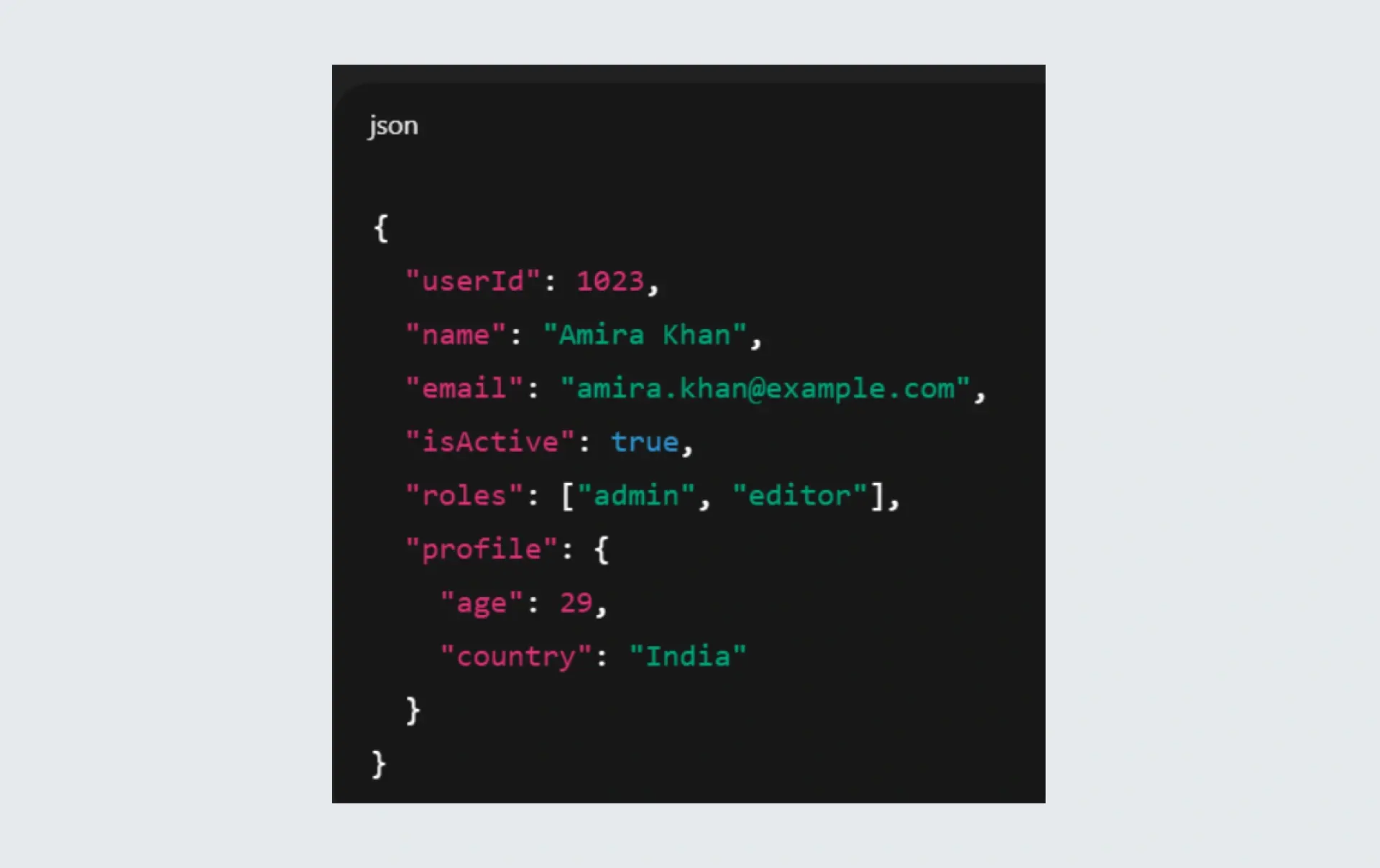
This is easy for humans to read, but it can become large in size and slow to parse if thousands of such objects are transferred every second.
Example 2: JSON in a Real-Time Event Stream
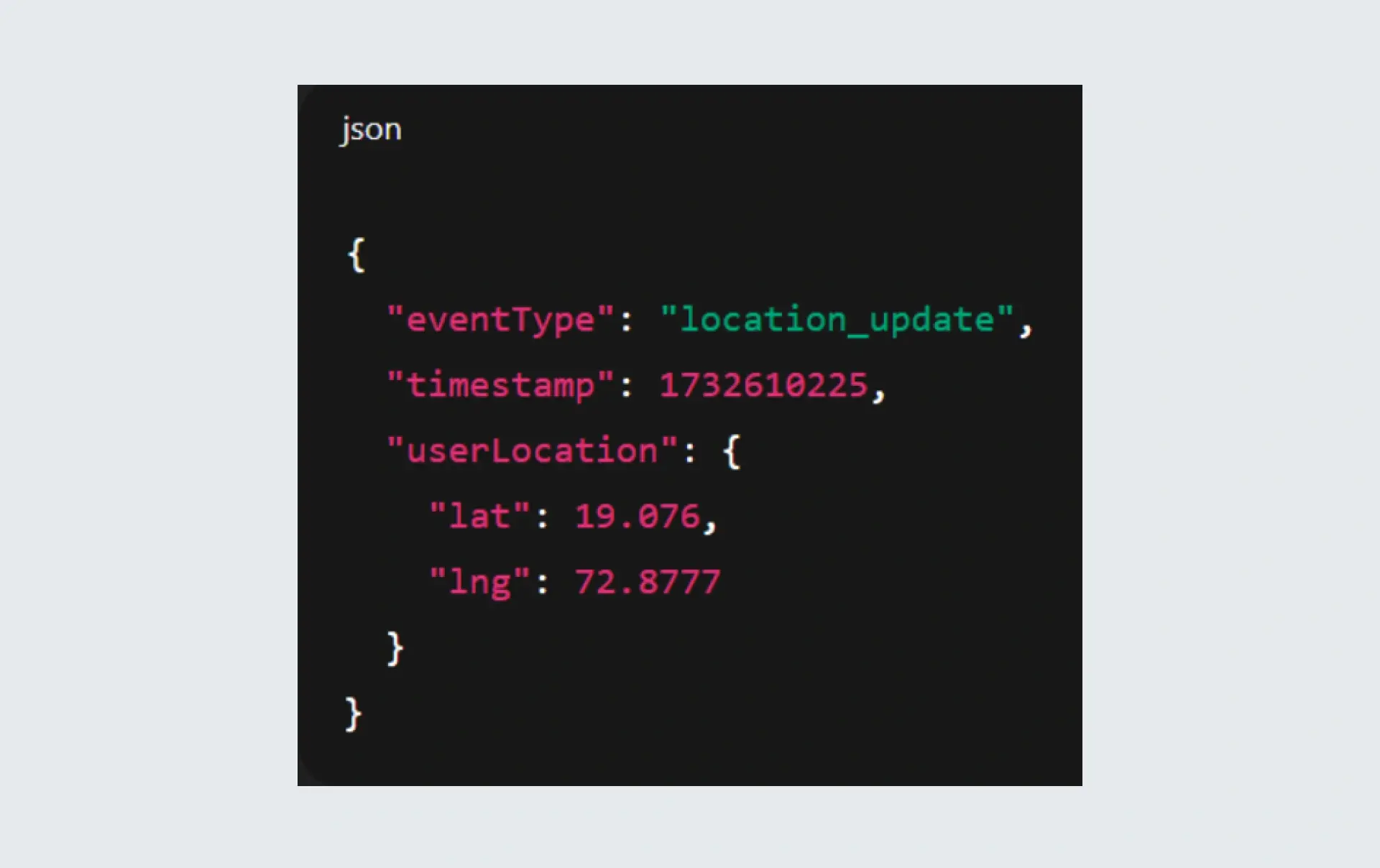
This works well, but the repeated key names (eventType, timestamp, userLocation, lat, lng) make the payload larger.
What is TOON?
TOON (Token-Oriented Object Notation) is a compact, machine-friendly data format designed to eliminate the overhead typically found in text-based formats, such as JSON. Instead of storing long field names, repeated keys, or verbose strings, TOON uses:
- Numeric tokens
- Byte-level codes
- Compact binary values
- Predefined schema maps
- Array-based positional structures
TOON focuses on three priorities:
- Speed (very fast parsing with minimal string operations)
- Efficiency (lower CPU and memory usage)
- Smaller payload size (messages can be 60–90% smaller than JSON, depending on structure)
How TOON Works Technically
TOON removes repeated text by replacing everything with structured tokens:
- Field names become numeric tokens (e.g., 01, 03, 0C).
- Common values (e.g., "success", "active") also use tokens.
- Numbers are stored in binary form, not as characters.
- Strings are referenced by ID, rather than being repeated.
- Arrays are used wherever possible to avoid transmitting keys entirely.
Because of this structure, TOON avoids the most expensive operations in JSON:
- No string comparisons
- No repeated key parsing
- No redundant text
- No human-readable overhead
This results in small payloads and high-speed processing.
Example:
JSON Version:
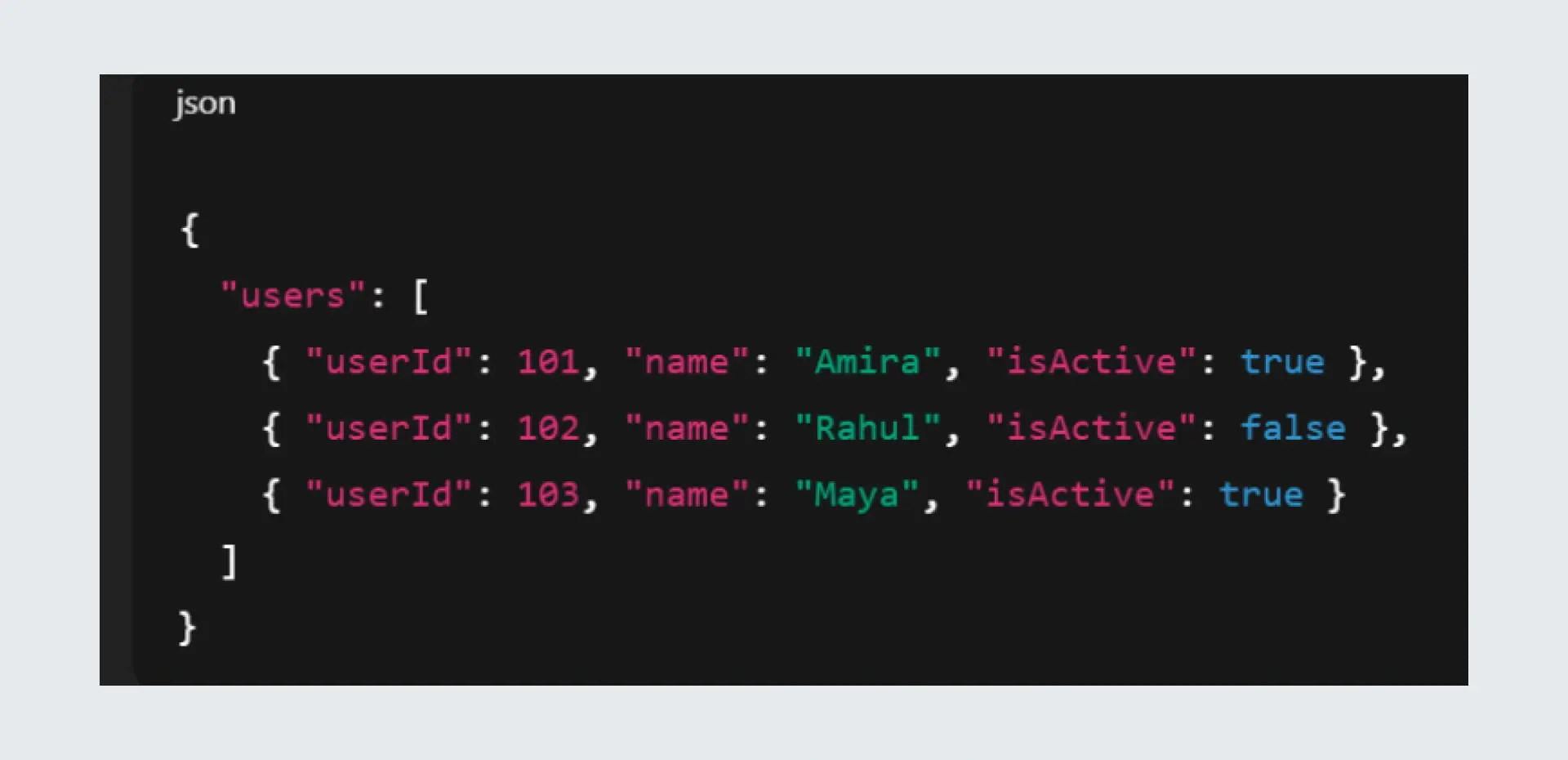
Problem with JSON:
- Each object repeats the keys “userId”, “name”, and “isActive”.
- Names are repeated as full strings.
- Parsing requires repeated text lookup and comparison.
TOON Version:
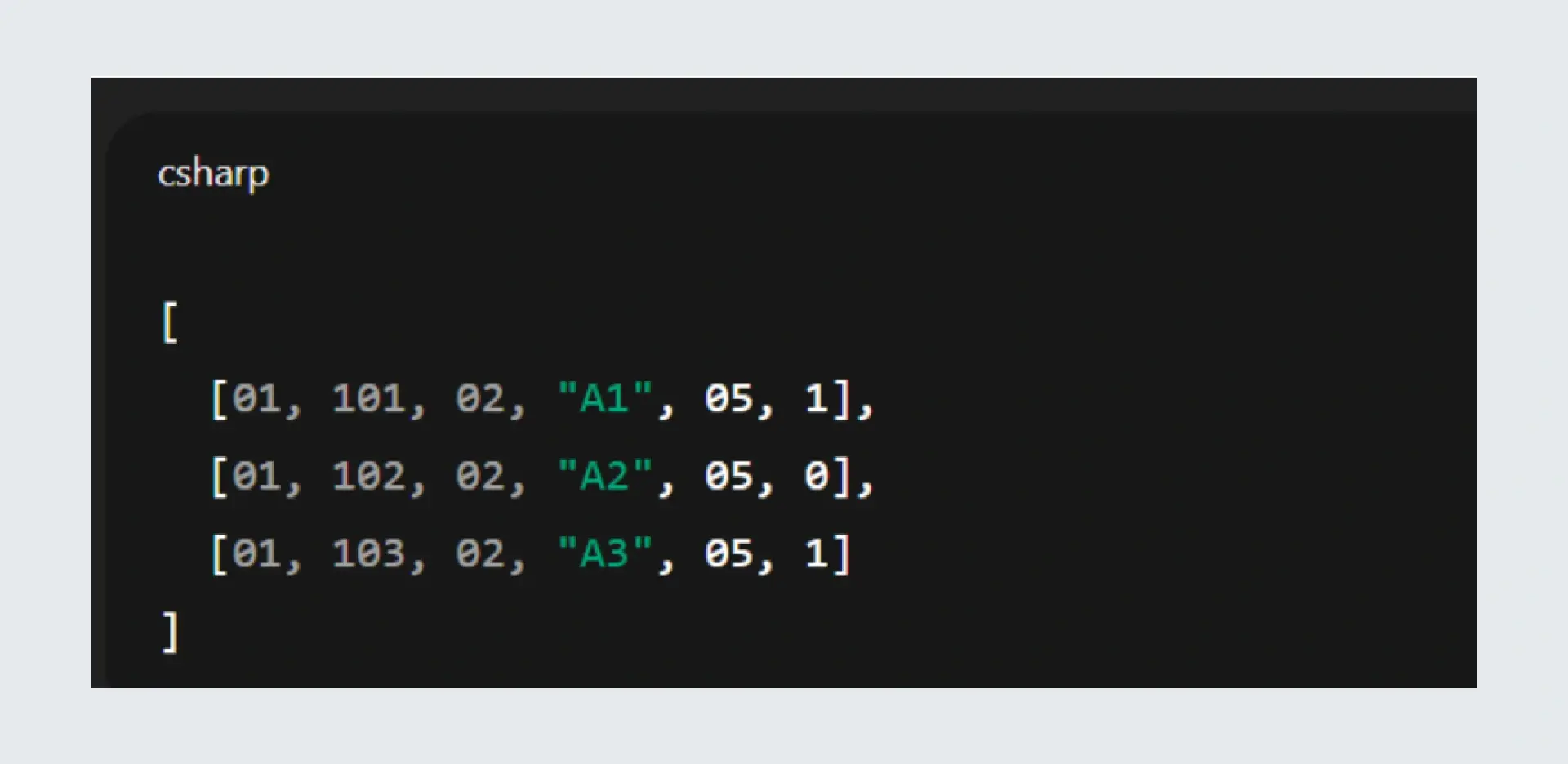
Token Map:
- 01 → userId
- 02 → name
- "A1", "A2", "A3" → IDs in a shared string table (no repeats)
- 05 → isActive
- 1 / 0 → boolean values
Why does this save a considerable amount of space?
- Keys do not repeat inside the array.
- Tokens are bytes, not strings.
- Names are referenced by ID, not repeated text.
- Numbers are stored in binary form.
In large datasets (thousands of rows), TOON can reduce payload size by 60–90 percent, especially when arrays contain repeated structures, something JSON is notably inefficient at.
JSON vs TOON: Simple Comparison Table
|
Feature |
JSON |
TOON |
|
Readability |
Very high; easy for humans |
Lower; token-based and requires a dictionary |
|
Structure |
Flexible, open |
More strict and predefined |
|
File Size |
Larger due to long keys |
Smaller because of tokens |
|
Performance |
Good for general use |
Faster in repetitive or large-scale data |
|
Learning Curve |
Very easy |
Slightly higher (requires token mapping) |
|
Tool Support |
Supported everywhere |
Limited to specific systems |
|
Use Case |
Public APIs, web apps |
Internal systems, high-speed workflows |
Technical Differences Between JSON and TOON
JSON and TOON both help systems store and exchange data, but they work very differently at a technical level. JSON is a text-based format designed to be human-friendly, while TOON is a token-based format optimized for speed and efficiency. These differences directly impact performance, size, and real-time behavior.
1. How Data Is Represented
JSON stores everything as text with readable keys, strings, and symbols. This makes it easy for developers to work with, but adds overhead. TOON replaces all keys and repeated values with compact numeric tokens or byte codes. Because the format is binary-like, the resulting data is far smaller and much faster for machines to interpret.
2. Parsing and Processing Speed
JSON requires a complete parsing step, where the system reads characters, checks syntax, converts text into objects, and maps keys to their corresponding values. This process becomes slower as the data volume increases. In contrast, TOON utilizes a predefined schema that enables systems to read tokens directly, eliminating the need for heavy parsing. This significantly reduces CPU usage and accelerates processing, especially in real-time environments.
3. Payload Size and Efficiency
Every JSON message repeats its keys and stores values as text, which increases the size. TOON eliminates this repetition by sending only tokens and binary values. As a result, TOON payloads are often a fraction of the size of JSON, making them ideal for high-frequency systems such as gaming, IoT devices, or streaming analytics.
4. Schema and Structure Requirements
JSON is flexible and schema-less, allowing structure changes at any time. Developers can freely add or remove fields. TOON depends on a fixed schema that defines the token map. Changing data structure means updating the schema across systems. This makes TOON more rigid but also more predictable and efficient.
5. Readability and Debugging
JSON is easy for humans to read and debug. Developers can open a JSON file and immediately understand it. TOON is not readable by humans because tokens like 01 or 0C have no meaning without the schema. It requires tooling or documentation to interpret, which improves efficiency but reduces transparency.
6. Encoding and Supported Data Types
JSON uses UTF-8 text and provides only basic data types like strings, numbers, arrays, and objects. TOON uses binary encoding and supports compact numeric types (like int8 or int16), enums, and even compressed strings. This gives TOON the ability to model high-performance data structures that JSON cannot efficiently represent.
7. Network and Real-Time Performance
Because JSON is larger, it consumes more bandwidth and is slower on weak or congested networks. TOON’s smaller size means less data travels over the network, making it ideal for systems that require speed, such as sensor data transmission, multiplayer games, trading platforms, or dashboard event streams.
8. Tooling and Ecosystem Support
JSON is supported everywhere; every language, database, API, and framework understands it. TOON is newer and requires specific libraries or custom tools. While it delivers performance gains, adopting it may require more setup and integration work.
Conclusion
JSON remains the dominant, human-friendly, and widely supported data format for the modern web, used in everything from APIs to mobile apps. TOON, on the other hand, offers extreme performance and compactness, making it ideal for real-time, high-speed, and resource-limited environments. They are not rivals. They are tools, each designed for a different purpose.
Frequently Asked Questions
Q1. Is TOON intended to replace JSON in modern applications?
No. TOON is not a replacement for JSON. JSON remains the standard for fast, simple data exchange in APIs and web applications. TOON is designed for more complex scenarios where data relationships, structure, and semantics need to be preserved and validated.
Q2. Which format is faster: JSON or TOON?
JSON is generally faster because it is lightweight and easy to parse. TOON may require additional processing due to its richer metadata and token-based structure, but it offers advantages in complex, rule-driven systems where clarity and contextual understanding matter more than raw speed.
Q3. Can JSON and TOON be used together?
Yes. Many teams use JSON for communication and TOON for internal modeling or configuration. They serve different purposes and can coexist in the same architecture without conflict.
Q4. When should an organization consider using TOON?
TOON is ideal when a system needs advanced structure, precise relationships, contextual metadata, or strong validation. This includes enterprise systems, automation workflows, AI pipelines, digital twins, and applications where data meaning is critical.